Home architecture guide
Permanent Lighting for Homes with Large Garage Facades
On many homes, the garage is the widest part of the front elevation and the closest to the street. Its eave is often the longest straight line on the house, and permanent lighting makes that line even stronger. The design goal is balance: lighting the garage in a way that supports the entry and main gables, so the whole house reads well at night.
Why the garage run matters
A two- or three-car garage gives you a long, uninterrupted eave and usually a gable above it. Lit evenly, that run draws the eye first, simply because it is the biggest continuous line. That is not a problem with the house. It is a design fact to work with.
In this example, the gables over the garage, the main roof and the entry are all traced, so the garage reads as part of one composition rather than the only lit feature.
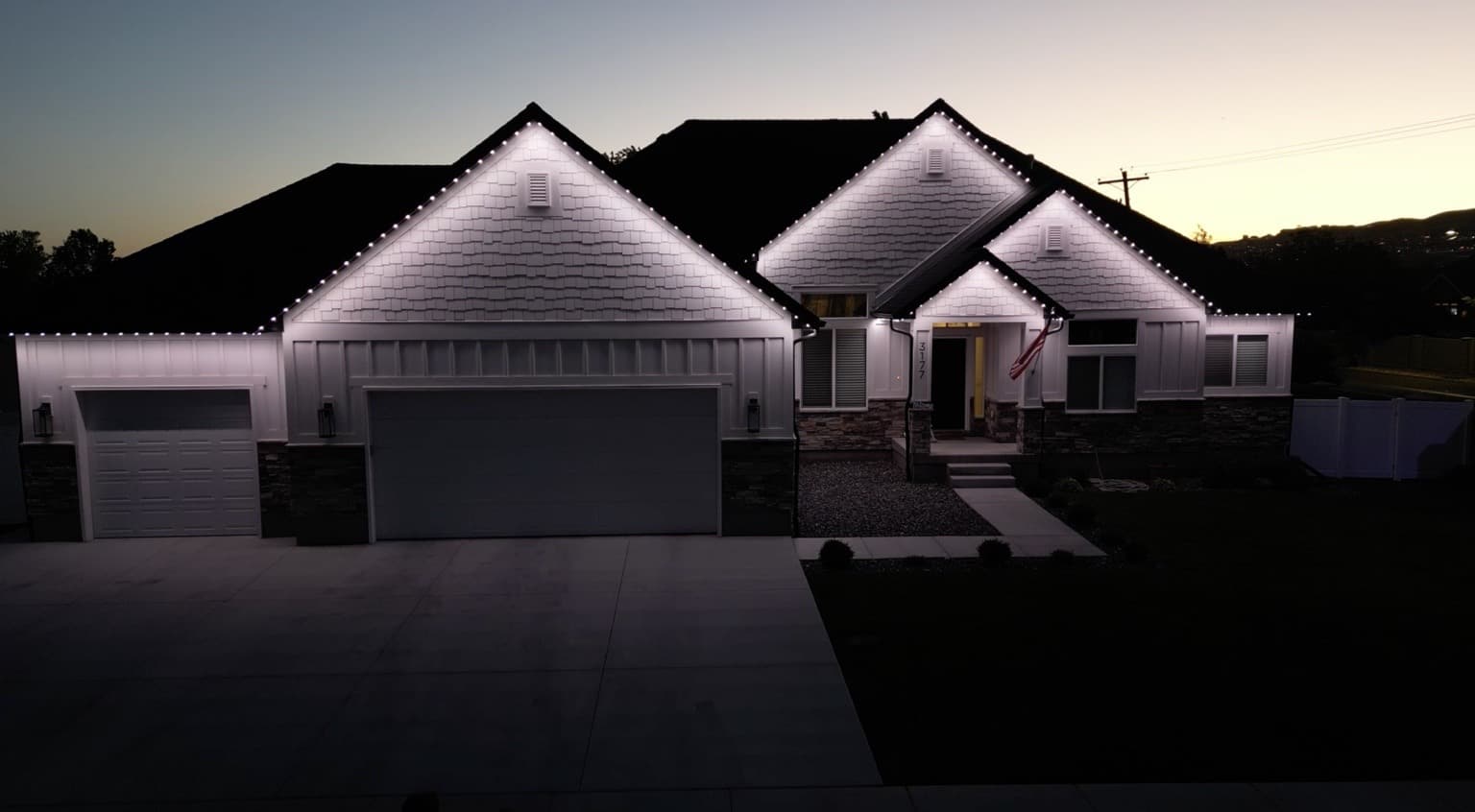
Rhythm across a long eave
Along a long, straight eave, evenly spaced lights create a strong, regular rhythm. At night that rhythm is what makes a garage run look crisp, and also what makes it visually heavy if it is the brightest thing on the house.
Because the spacing is fixed, you control the garage's visual weight with layout and scene rather than with spacing: which returns are included, whether the garage gable is lit, and what the garage section shows compared with the rest of the house.
Balancing the garage with the entry and upper gables
- Give the entry a destination. Lighting the gable or roofline over the front door draws attention toward the entry rather than the garage doors.
- Lift the eye with upper gables. On two-story homes, lit upper eaves and peaks add height and offset a wide lower garage run.
- Edit the short returns. Small returns at the garage corners can often stay dark without weakening the outline.
- Use zones intentionally. With TruLight zones, the garage can run its own scene, such as warm white on the house with a team color on the garage.
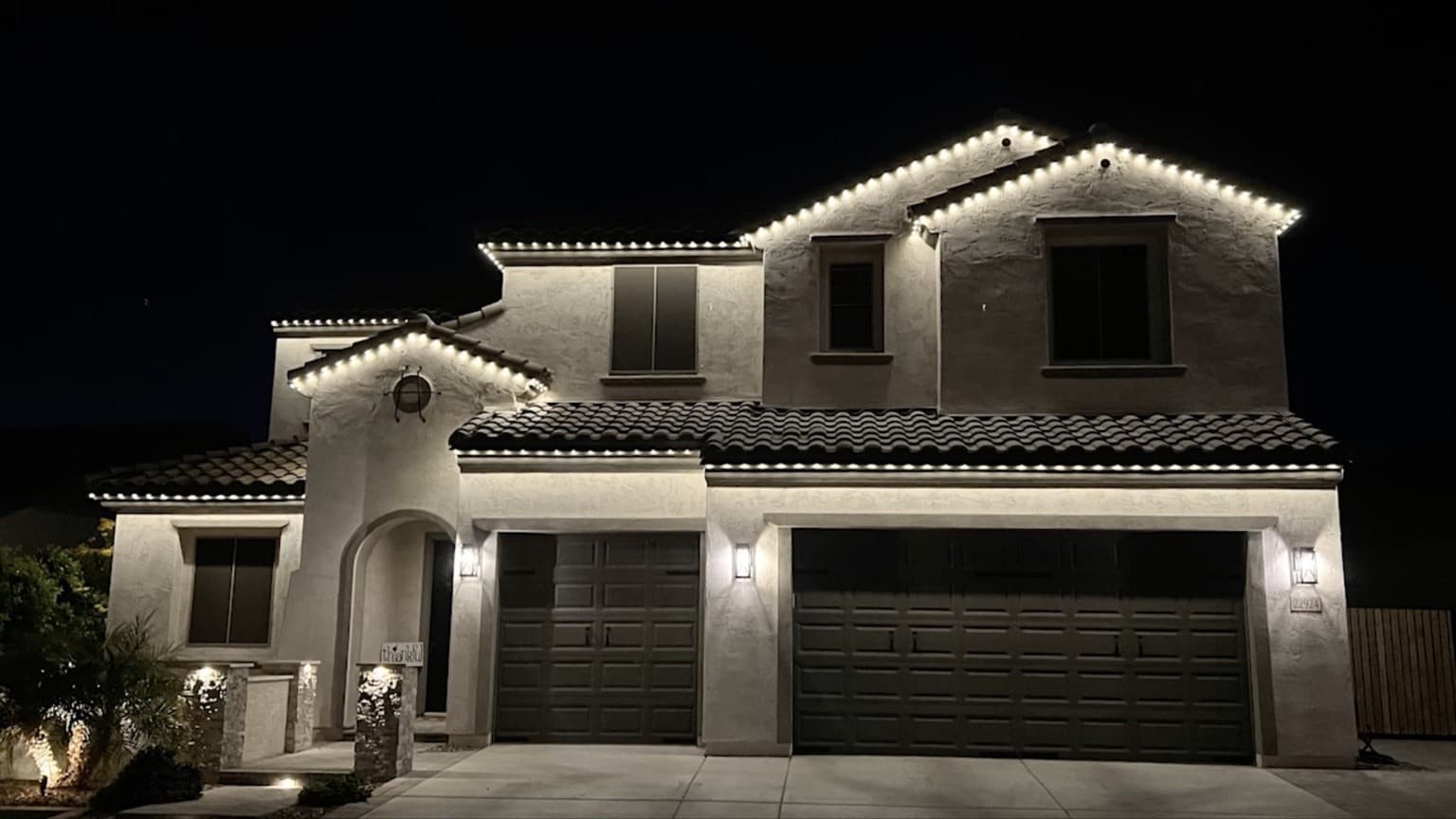
Adding depth at the entry
Garage-forward homes often have the front door set back from the garage face. Roofline lighting alone leaves that recessed entry, its walkway and any stone columns in shadow. Path, step and entry lighting bring the eye back to the front door and add depth between the driveway and the house.
See designing roofline and landscape lighting together and our landscape lighting.
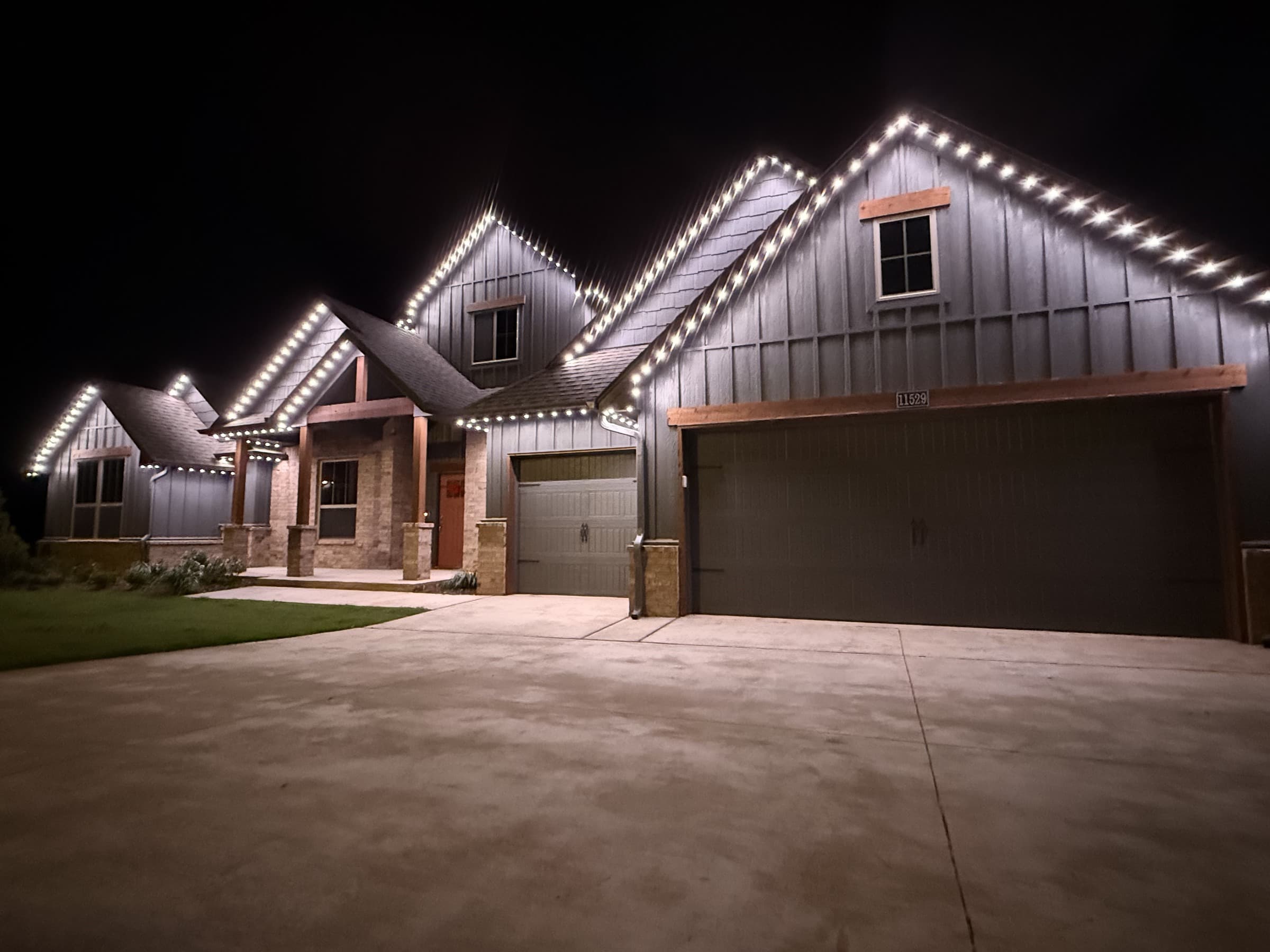
Holidays on a garage-forward home
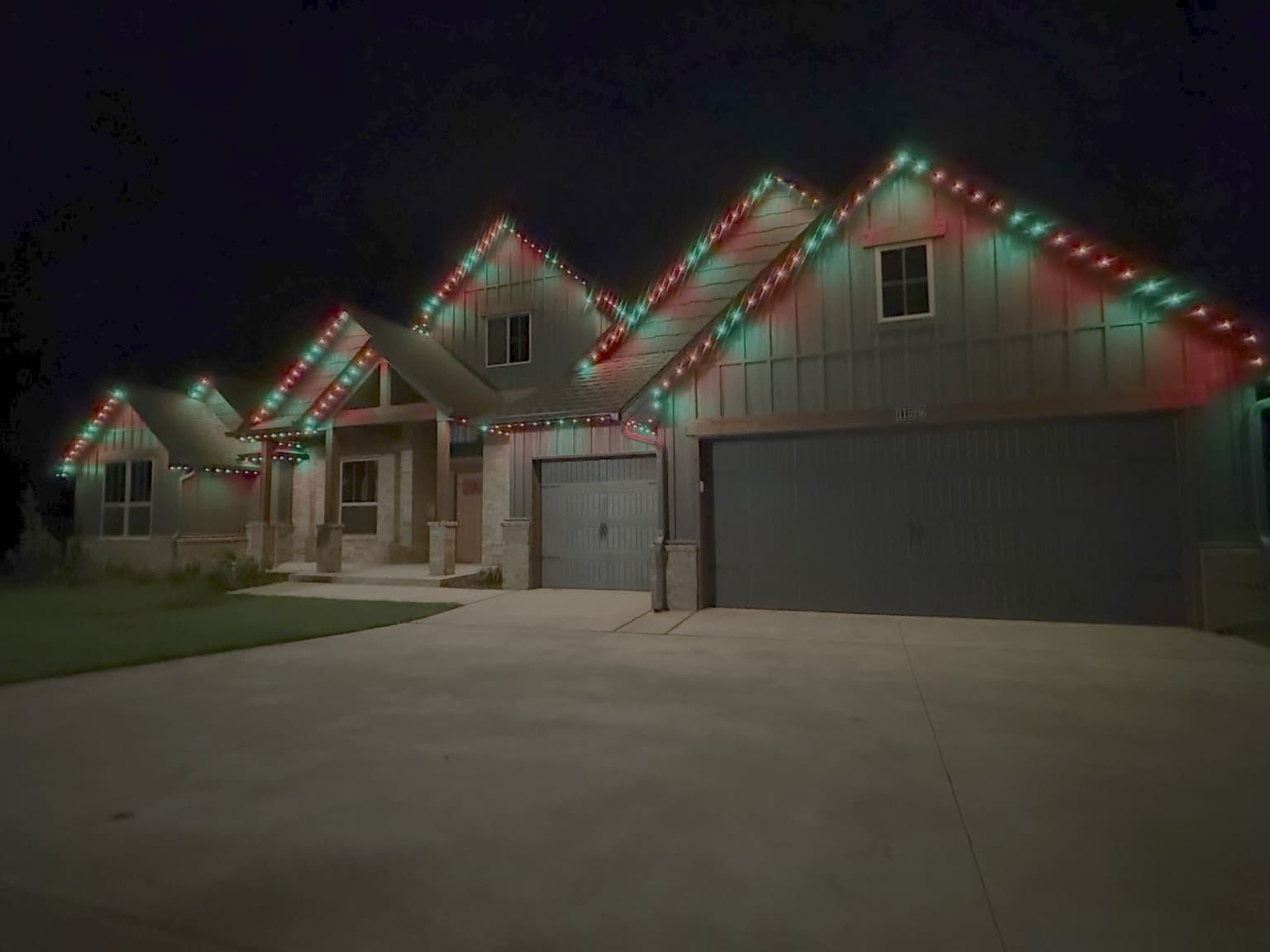
A long garage run is an advantage for holiday and event scenes: color patterns have room to repeat, and the garage gable becomes a natural focal point. Everyday warm white keeps the same layout restrained on ordinary nights. Read more in our warm-white guide.
What to ask during your quote
- How will the garage run be balanced with the entry and main gables?
- Should the garage be a separate zone?
- Would entry or path lighting add more than lighting additional returns?
- How does the total footage affect pricing?
See the TruLight system or request a free quote.
Garage facade FAQ
Should the garage roofline be lit?
Usually it is part of the design, because the garage eave is often the longest, most visible line on the front of the house. The question is balance: how it relates to the entry, the main gables and the upper roofline.
How do I keep a long garage run from dominating the house?
Give the entry and main gables equal or greater emphasis, consider leaving short secondary returns dark, and add entry or landscape lighting so attention is not only on the garage.
Can the garage be a separate zone?
Yes. With TruLight zones, the garage section can run a different scene from the rest of the roofline, such as warm white on the house with a team color on the garage.
Balance Your Home's Front Elevation
Request a free on-site quote and we'll plan a layout that leads the eye to your entry.