Home architecture guide
Permanent Lighting for Stone & Brick Homes
Stone and brick have texture, depth and warm color that light can either bring out or flatten. The design problem on a masonry home is not just tracing the roofline. It is choosing a white and a brightness that let the material read well, then deciding whether the entry, columns and stonework lower on the facade need their own light.
What makes masonry different
Brick and stone are darker and rougher than painted siding or smooth stucco. They absorb more light and break it up into small highlights and shadows. Roofline light that grazes down a masonry wall picks out that texture, which is a big part of why masonry homes can look so good with permanent lighting.
The same texture can work against you. Very bright, cool white can make stone look flat or gray, and lighting every edge of a steep, multi-gable masonry home can overwhelm the material itself.
Warm white vs neutral white on brick
The same single-story brick home in warm white and neutral white. Warm white leans into the red and orange tones of the brick; neutral white looks cleaner and cooler. Neither is wrong. This is the comparison worth seeing on your own home.
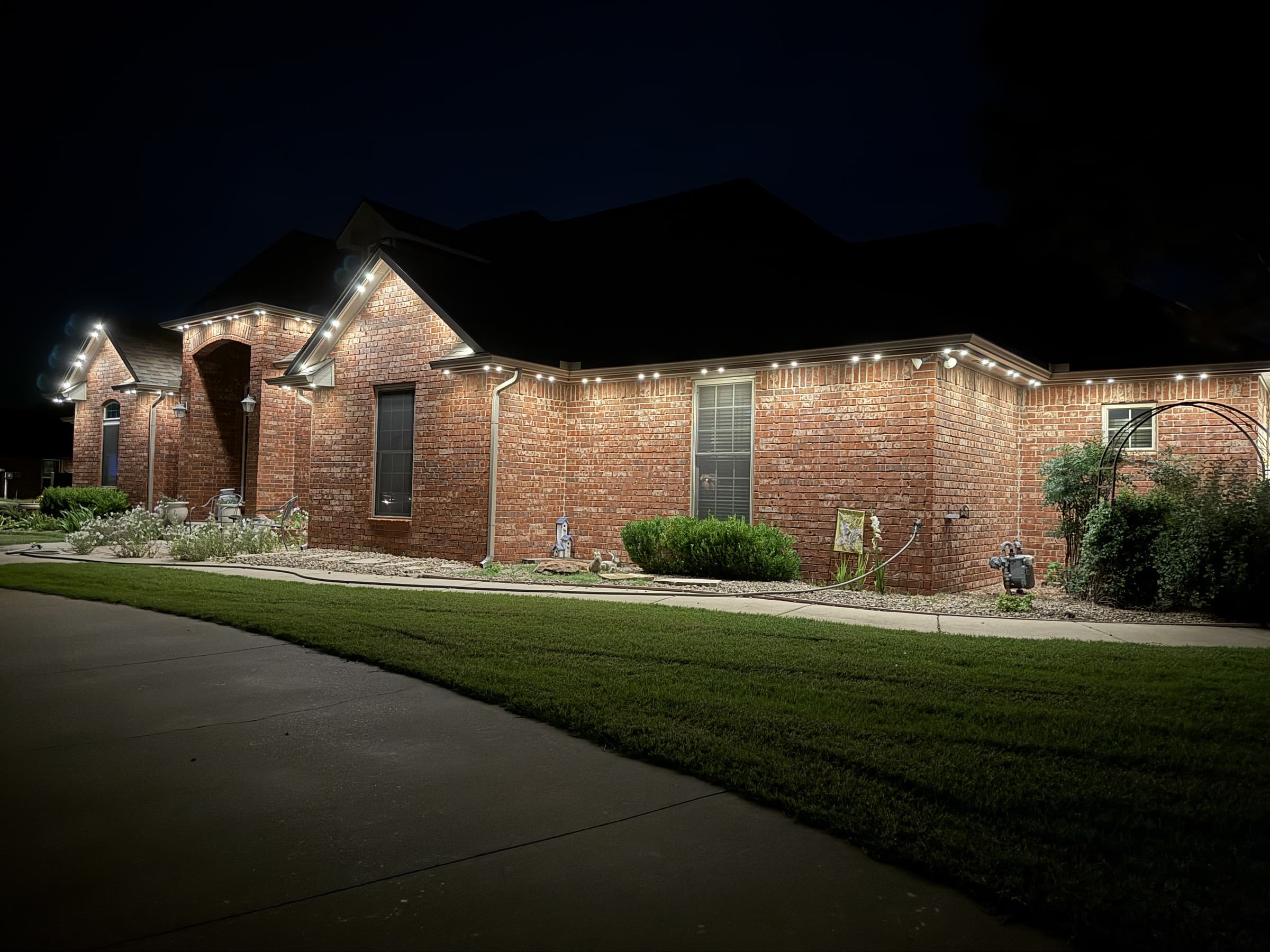
Warm white 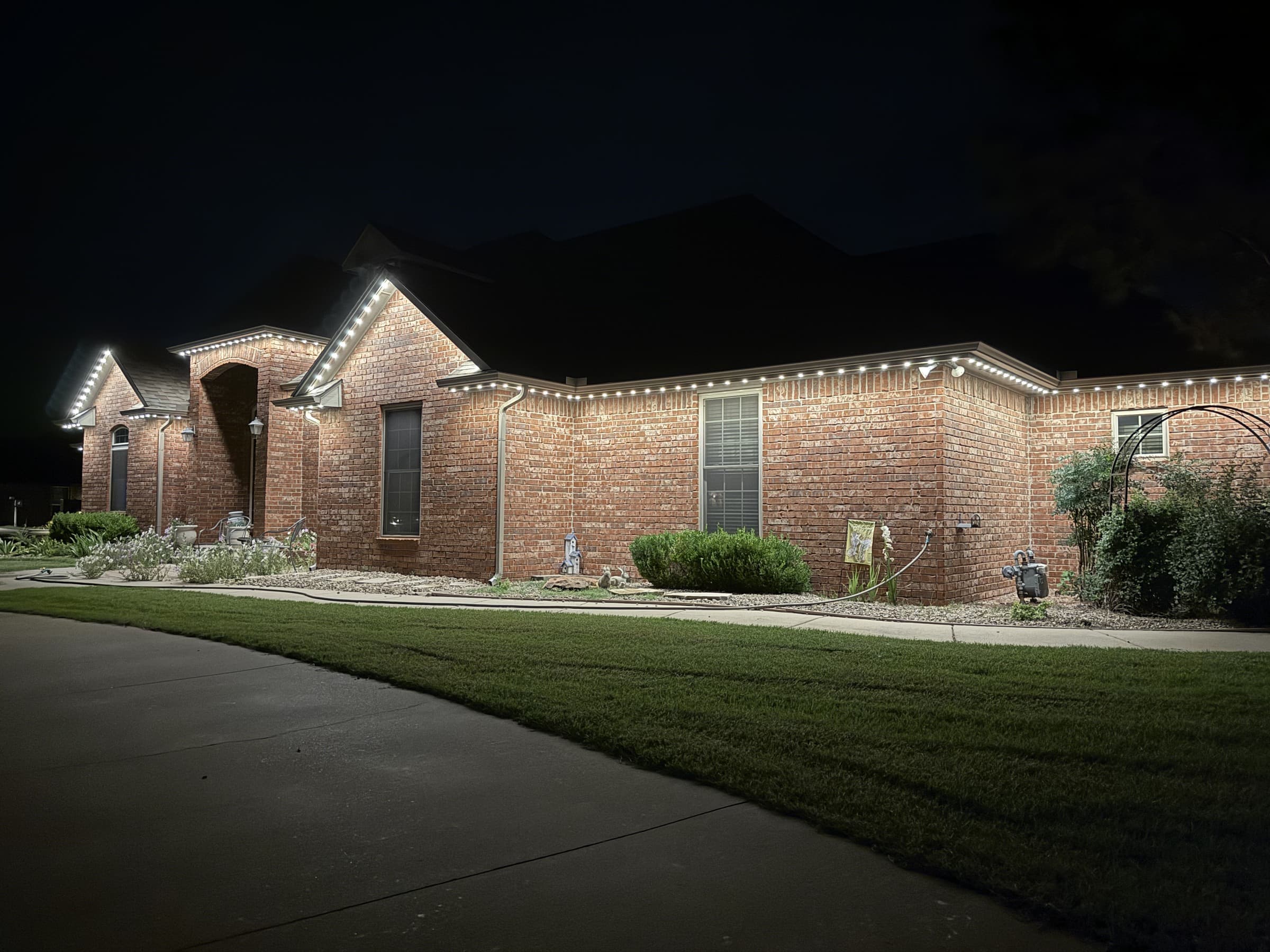
Neutral white 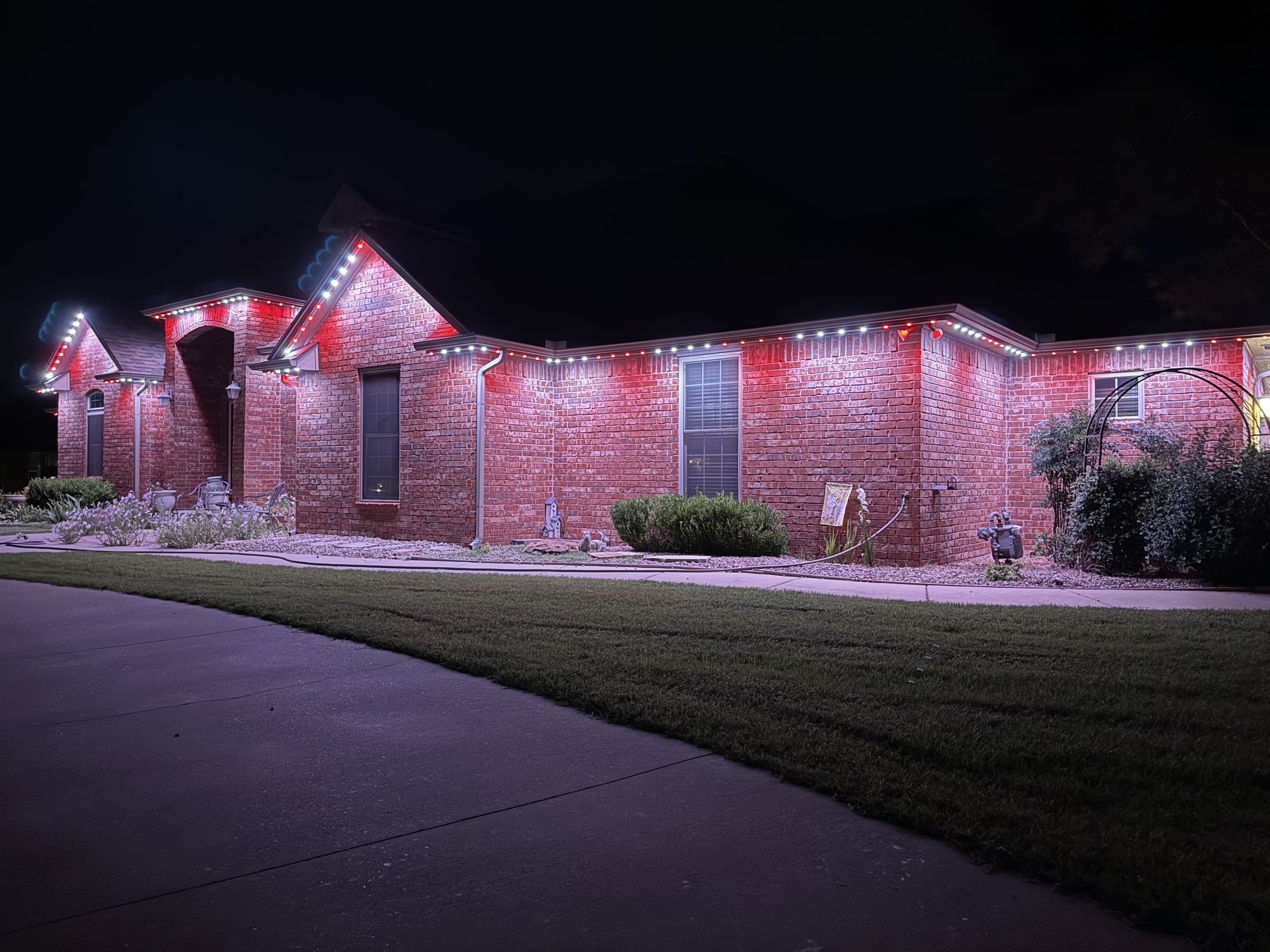
Red and white for an event
TruLight installation example: one home photographed from the same angle in each scene, not separate installations.
Layered gables on masonry homes
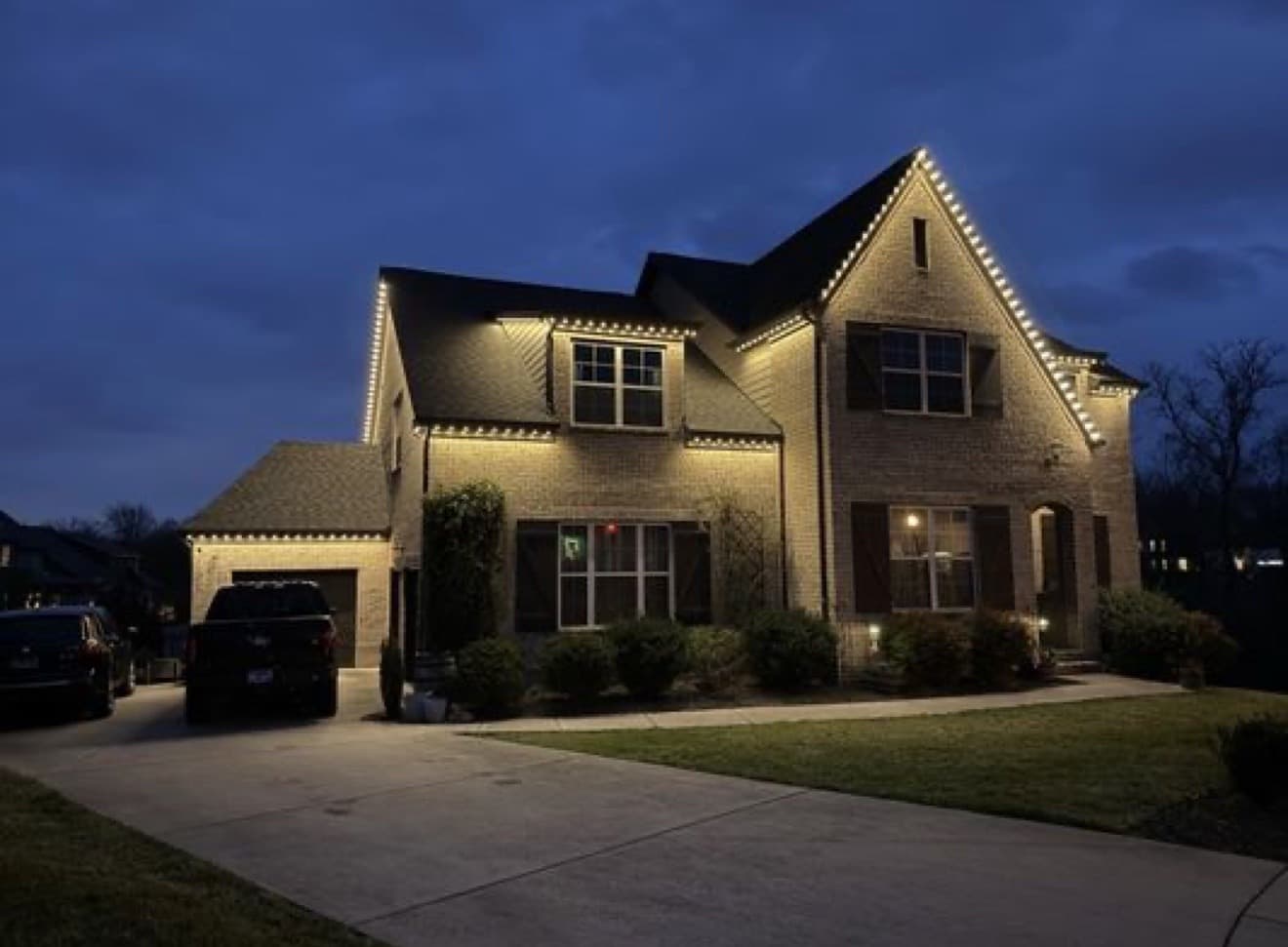
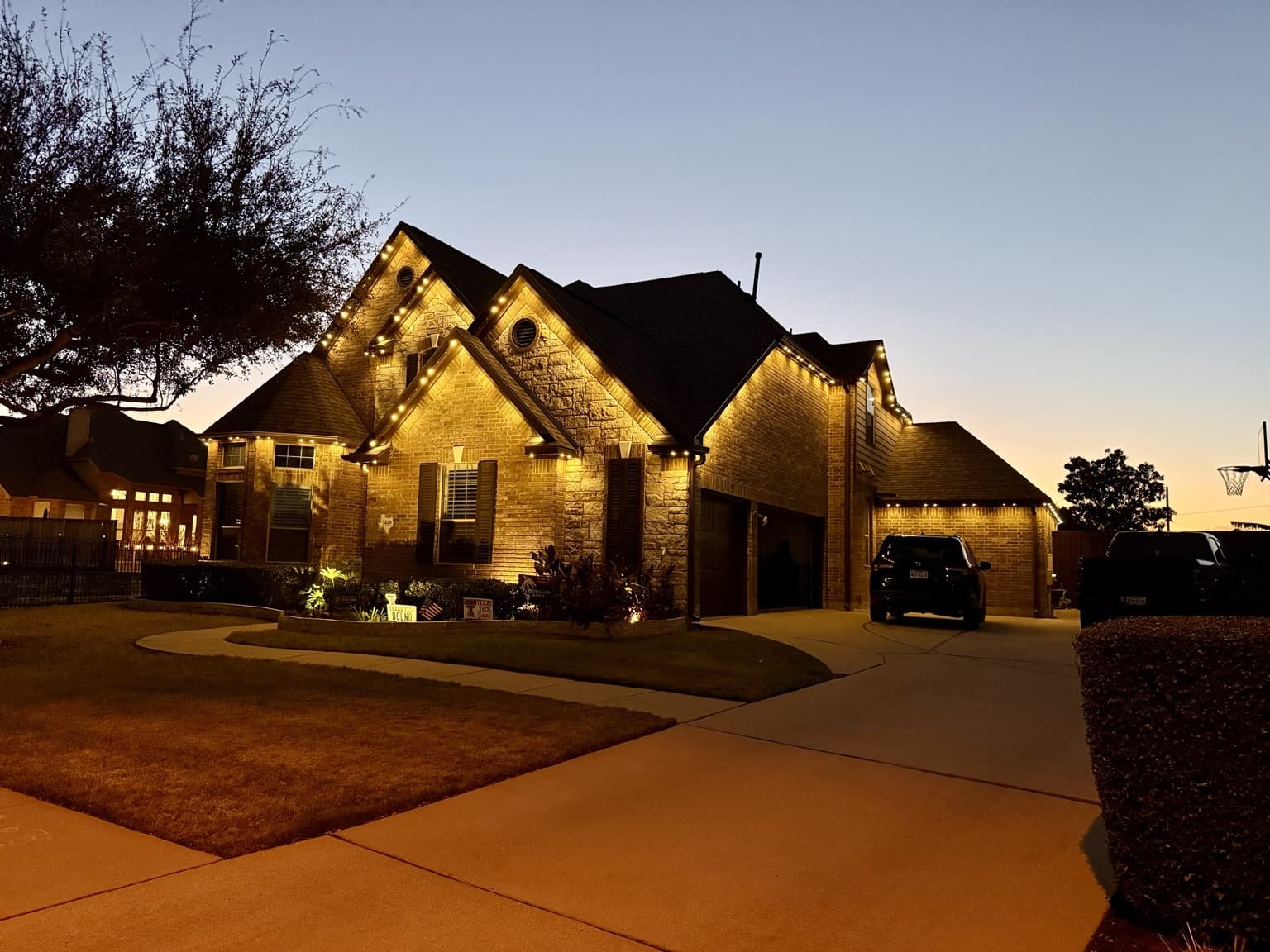
Traditional brick and stone homes often stack several steep gables across the front. Lighting the largest gables and the main eave lines gives the facade a clear outline; smaller dormers and returns can be included or left dark depending on how busy the result looks. Our two-story and multi-gable guide covers this in more detail.
In this example, warm landscape accents near the entry work with the warm-white roofline, so the house reads as one composition instead of an outline floating above a dark yard.
Entries, columns and stonework
Many masonry homes put their best material low on the facade: stone columns, a stone entry, or a stacked-stone base. Roofline lighting does not reach those well. Landscape accents aimed at stonework and the entry bring out that texture from the ground and give the eye a destination.
We plan both layers together so color temperature and brightness match. See designing roofline and landscape lighting together and our landscape lighting service.
Getting the white right
Warm white is a common choice on masonry because it complements warm-toned brick and stone, but it is a design preference rather than a rule. TruLight produces warm white from three dedicated warm-white LEDs in each light. Read more in our warm-white guide.
What to ask during your quote
- Can I see warm and neutral white on masonry like mine?
- Which gables should lead, and which could stay dark?
- Would landscape accents on the entry or stonework add more than additional roofline?
- How do the roofline's height and complexity affect pricing?
See the TruLight system or request a free quote.
Stone & brick FAQ
What white looks best on stone and brick?
Warm white is a common choice because it brings out the warm tones and texture of masonry, while very bright, cool white can make textured stone look flatter or harsher. It is a design preference rather than a rule, so compare scenes on your own home.
Should I add landscape lighting to a stone or brick home?
Often it is worth considering. Roofline lighting outlines the house, but masonry texture, columns and the entry sit lower on the facade. Landscape accents can light those areas from the ground and add depth.
Does permanent lighting attach to the brick?
The lights run along the roofline, so the mounting plan follows the fascia, soffit and trim. We install U or J track beneath the roof’s drip edge or at another position you prefer, depending on the fascia, soffit and trim on your home. We confirm the mounting approach for your home during the on-site quote.
Bring Out Your Home's Masonry
Request a free on-site quote and see warm white on your own stone or brick.