Home architecture guide
Permanent Lighting for Stucco, Siding & Board-and-Batten Homes
Light-colored stucco and siding reflect a lot of light. Permanent lighting on these homes reads brighter and washes farther down the wall than it does on darker materials. That is an advantage, but it changes the design: brightness, white tone, track color and which gables lead all matter more. This guide covers what we look at on stucco, lap siding and board-and-batten exteriors.
Why light exteriors behave differently
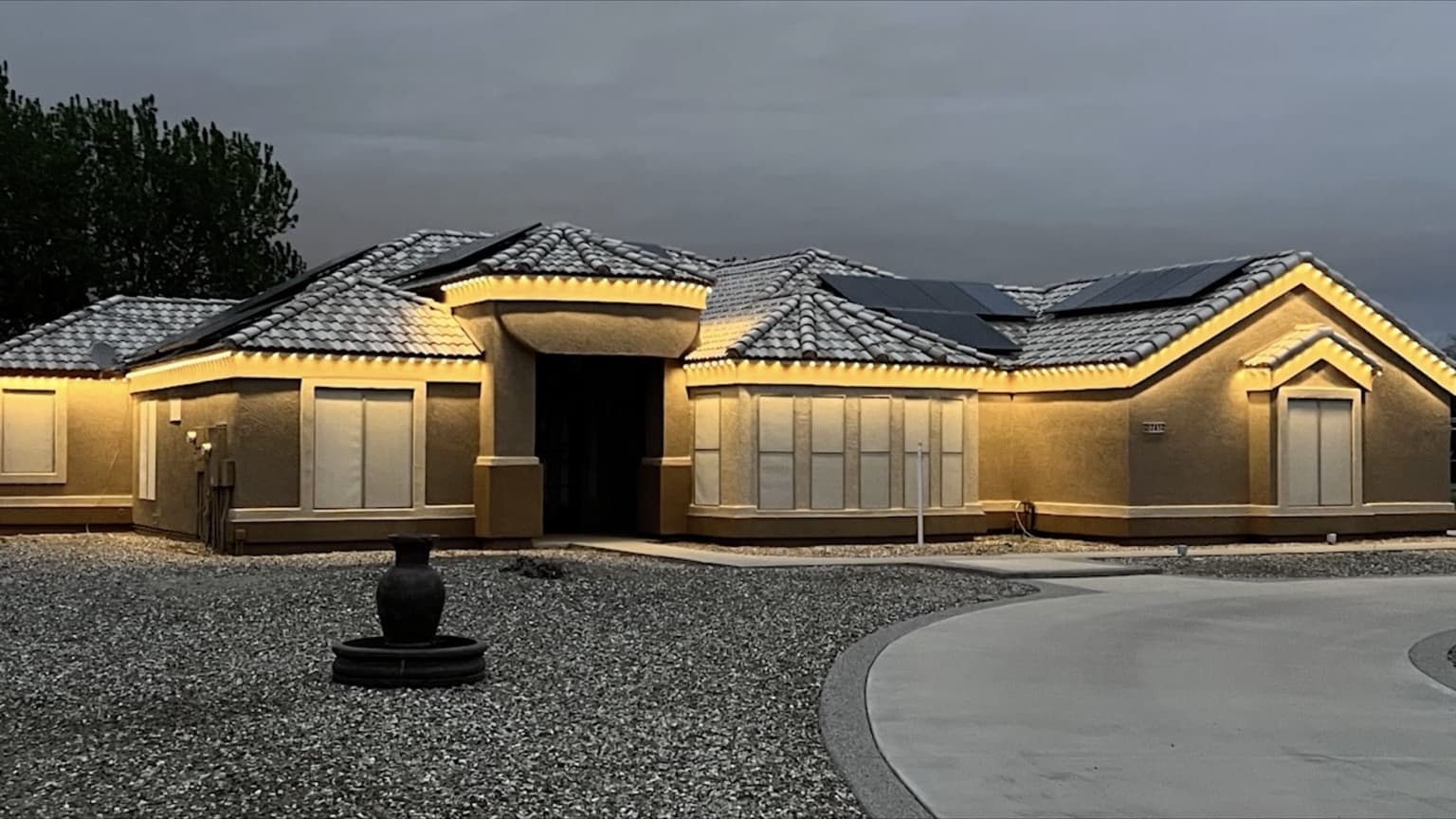
On a light stucco wall, the glow from the roofline spreads well below the eave. That can make a broad, single-story home look evenly lit with lights only at the roof edge. It also means a light set to full brightness can look stronger than intended for everyday use.
Siding behaves a little differently from smooth stucco. Lap siding catches light along each horizontal course, and board-and-batten creates vertical lines of light and shadow along the battens. Both add texture that smooth stucco does not have, which is worth keeping in mind when choosing brightness.
Mounting depends on the trim, not the wall
How the track is mounted depends on the fascia, soffit and trim at the roof edge, not on whether the walls are stucco or siding. We install U or J track beneath the roof’s drip edge or at another position you prefer, depending on the fascia, soffit and trim on your home.
Track color and daytime appearance
During the day, what you notice is the track against the trim. Contrast matters most on light exteriors, where a dark track stands out against white or cream trim. TruLight track comes in 7 colors: white, black, brown, beige, sandstone, walnut and grey. If none of the standard colors is a close enough match, we can paint the track to match your trim or siding for an additional charge.
Warm, neutral or cool white on light exteriors
Warm white tends to look soft and inviting on cream, tan and beige stucco. Neutral or cooler white looks crisper and more modern, and some homeowners prefer it on bright white siding. Neither is right for every home, and because light exteriors reflect so much, the difference is easy to see.
TruLight produces white from three dedicated warm-white LEDs in each light, rather than only from mixing color. Our warm-white guide and RGB vs RGBW guide explain why that matters.
Siding and board-and-batten: choosing which gables lead
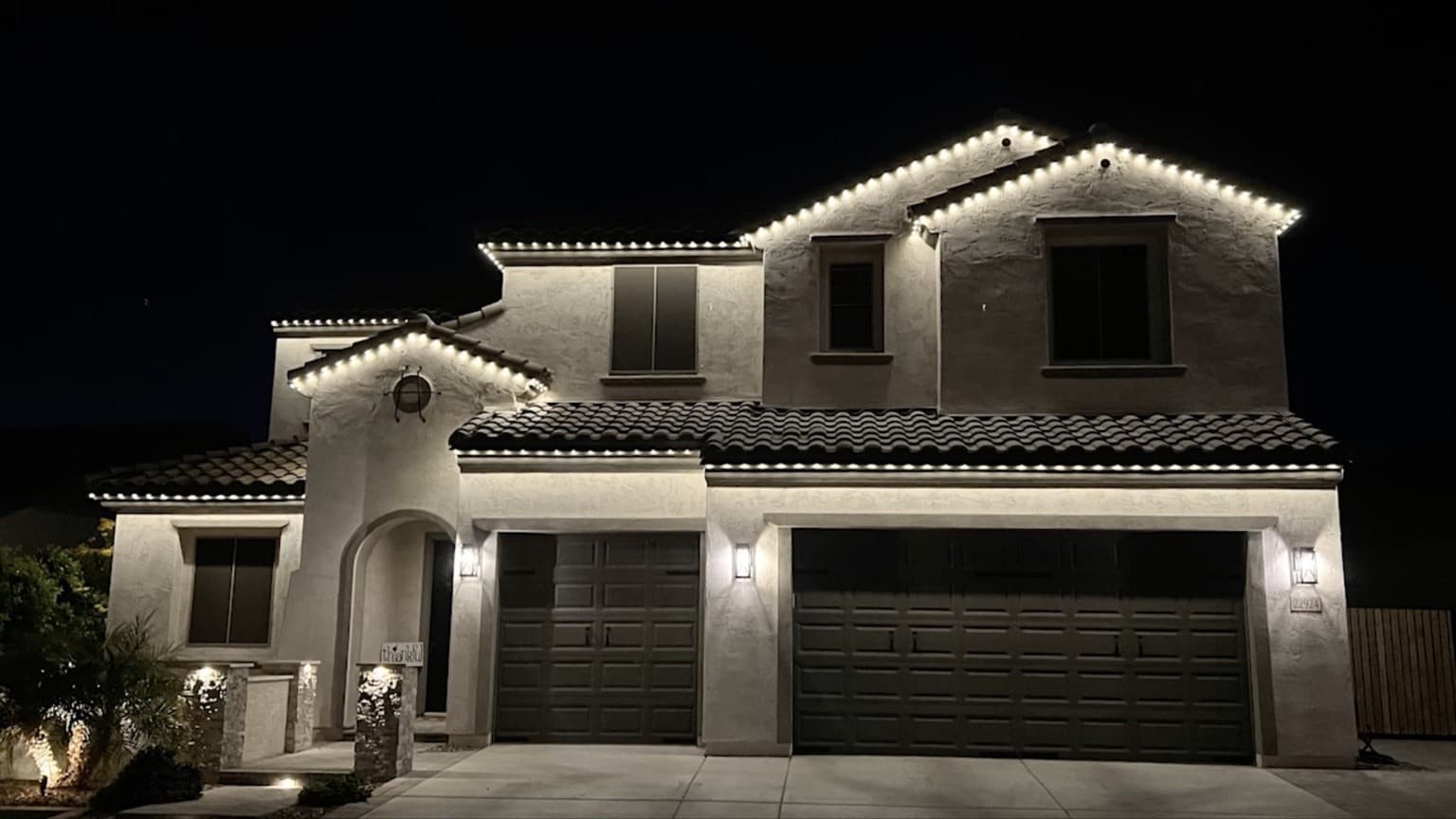
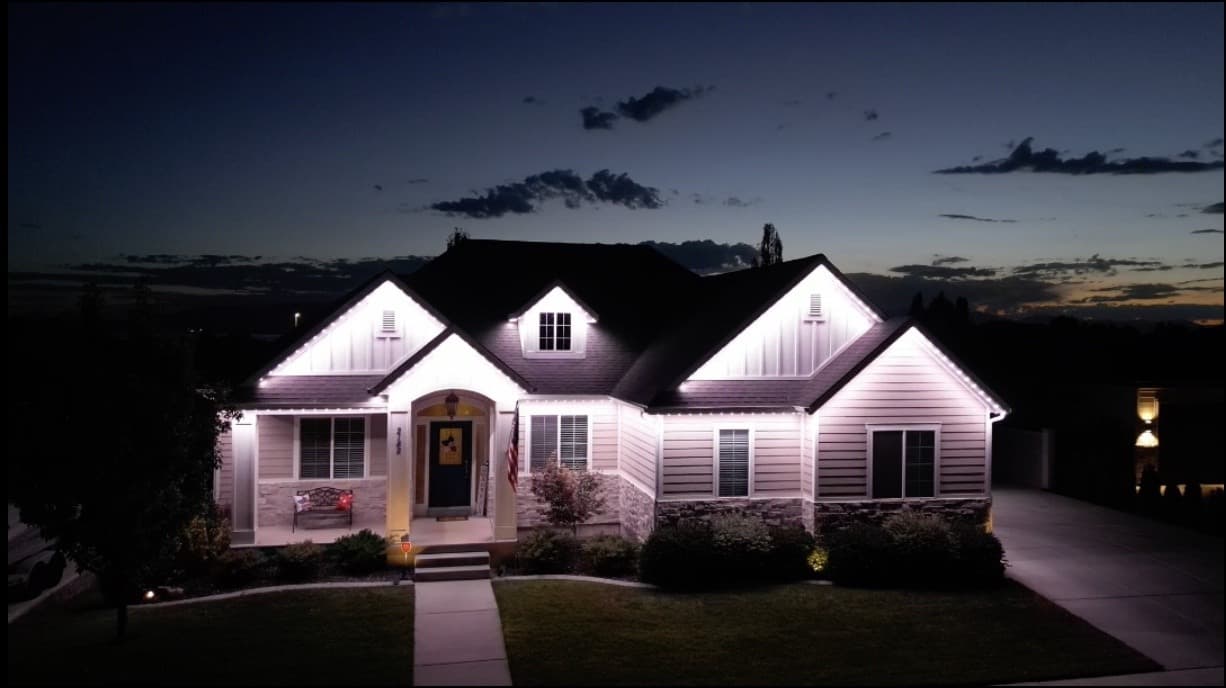
Many siding and board-and-batten homes have several front-facing gables, often with stone at the base. When every gable is traced at the same brightness, the result can look busy. A good starting point is the gables that frame the entry and the largest peaks, then deciding whether smaller gables add to the composition or make it feel too busy.
Stone bases and columns sit below the roofline, so they stay dark unless something lights them from below. That is where landscape lighting can complement the roofline.
How color reads on light stucco
Light walls pick up color strongly, so holiday and event scenes can wash the whole facade. These examples show purple and white, green and white, and red and white on stucco homes.
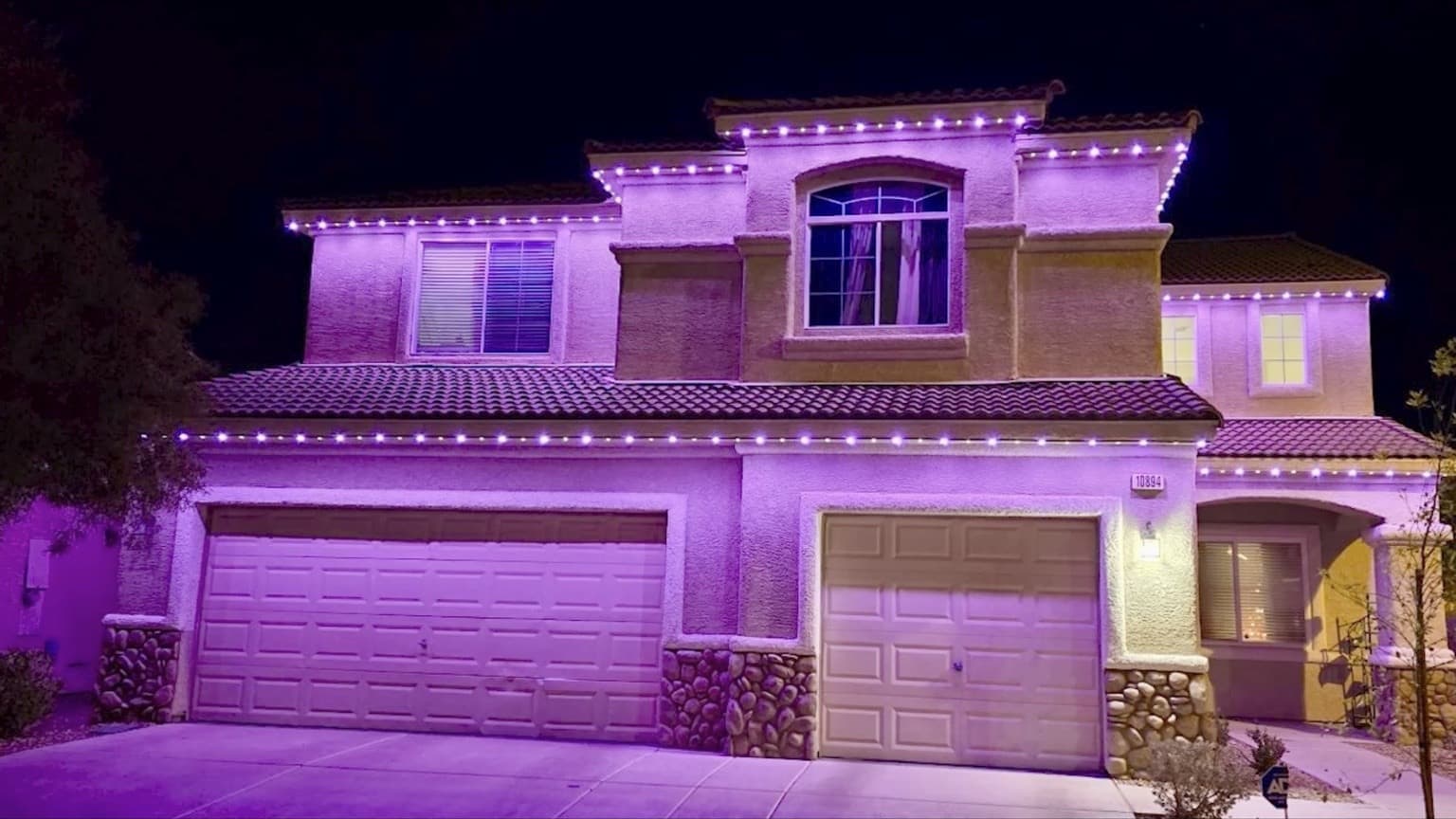
Purple and white 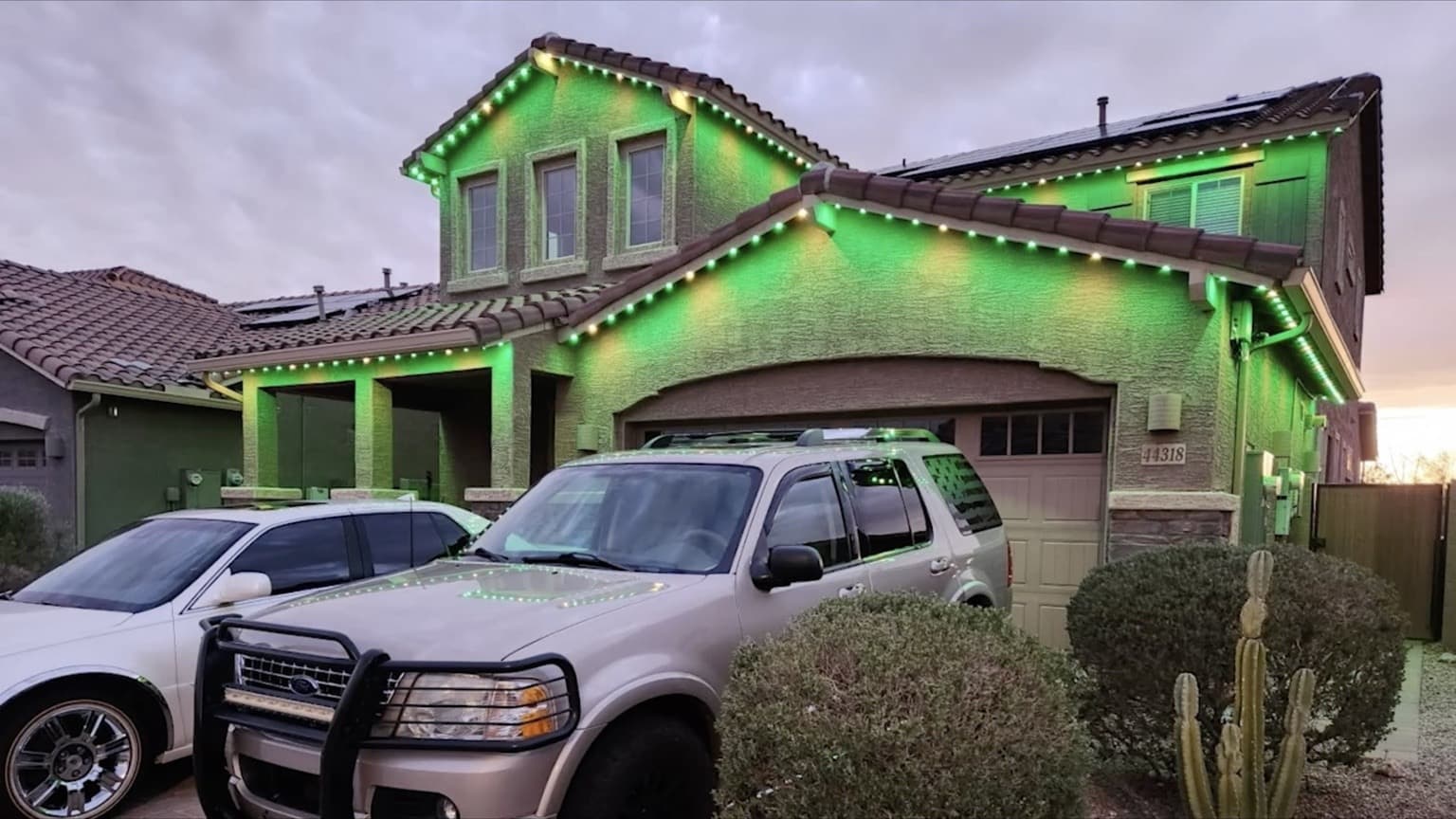
Green and white 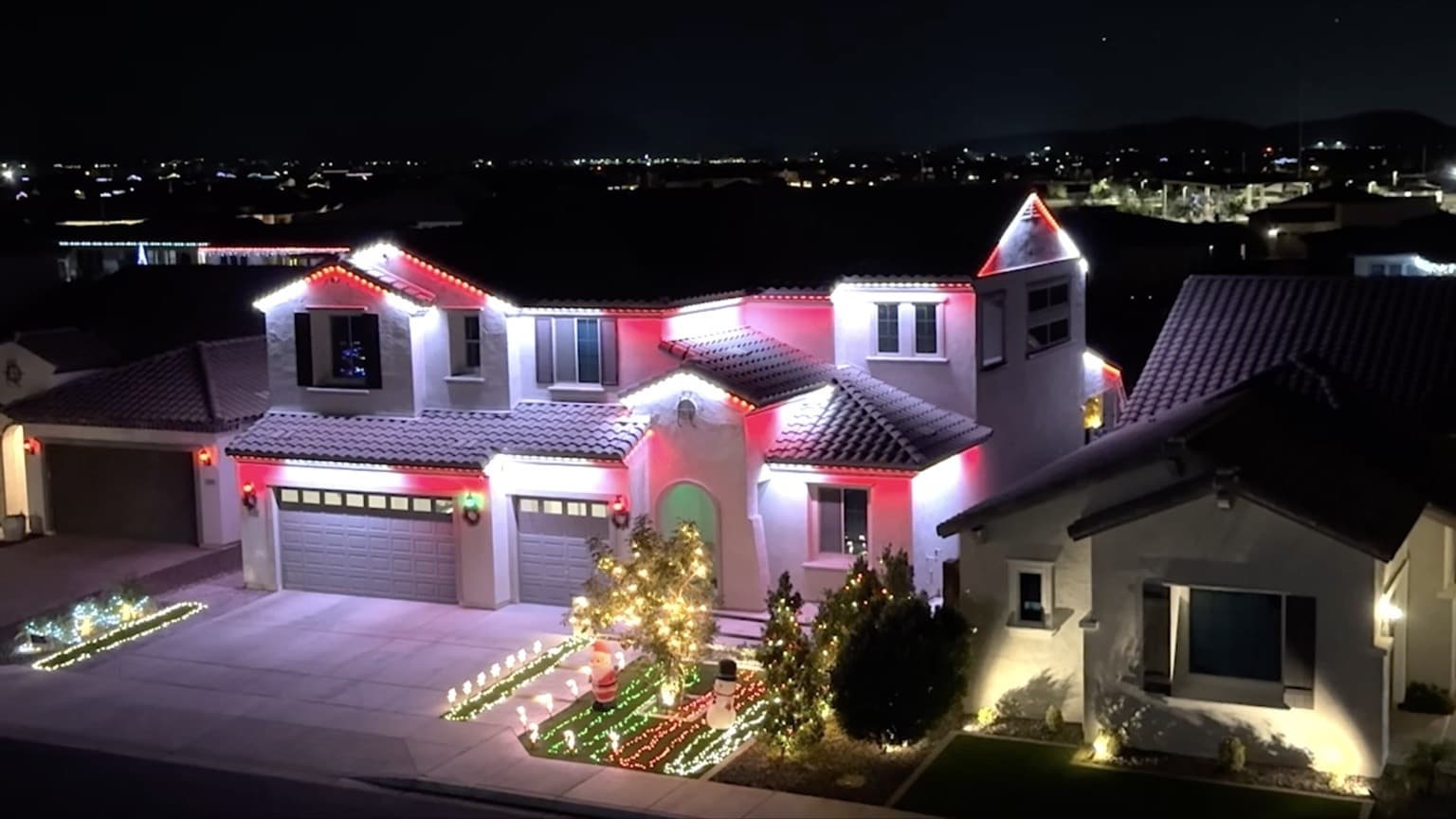
Red and white (yard decorations are separate)
TruLight installation examples from separate homes.
What to ask during your quote
- Where will the track mount on my fascia, soffit or trim, and how visible will it be from the street?
- Which track color matches my trim, or should it be painted?
- Can I see warm and cooler white on a home with light walls like mine?
- Which gables should lead the design, and which could stay dark?
- How does my roofline's complexity affect pricing?
See the TruLight system or request a free quote.
Stucco & siding FAQ
How is permanent lighting mounted on a stucco home?
Mounting depends on the fascia, soffit and trim rather than the wall material. We install U or J track beneath the roof’s drip edge or at another position you prefer, depending on the fascia, soffit and trim on your home. We confirm the mounting approach for your home during the on-site quote.
Will the track show against light siding or stucco?
TruLight track comes in 7 colors: white, black, brown, beige, sandstone, walnut and grey. If none of the standard colors is a close enough match, we can paint the track to match your trim or siding for an additional charge.
Is warm white or cool white better on a light-colored house?
Neither is right for every home. Light stucco and siding reflect a lot of light, so even moderate brightness reads strongly. Warm white tends to look softer on light surfaces, while cooler white looks crisper and more modern.
Why do colors look so strong on light stucco?
Light, smooth surfaces bounce colored light back toward the street, so a color scene can wash the whole wall. That is great for holidays and events, and it is also why everyday white often looks best below full brightness on light exteriors.
Plan Lighting for Your Home
Request a free on-site quote and we'll recommend track color, placement and a layout for your exterior.