New construction
Pre-Wire for Permanent Lighting While You Build
Most new homes get exterior outlets for seasonal lights, but not the wiring permanent lights need. Running it during construction, after siding and before insulation and drywall, puts the connections exactly where the roofline and landscape lights will go. Installation is faster and cleaner later, and pre-wiring is typically $200–$300.
Why pre-wire during construction
Permanent lights need low-voltage runs from the controller to the roofline, plus short jumps between separate roof sections. On a finished home we hide those wires or route them through the attic, which works but means working around insulation in the attic or crawlspace.
During construction, the walls are open and the same runs take a fraction of the effort. It is the same reason homes get pre-wired for networking, audio, video and security systems, work our founder has done many times. Permanent lighting often just isn't on the checklist yet.
What gets pre-wired
| Home runs to the roofline | A wire from the planned controller location to the first roofline section on each controller port. |
|---|---|
| Jumps between roofline sections | Short runs that carry the lights across gaps between separate sections, such as from the garage eave to the main roof. |
| Landscape access point | At least one run from the controller location to a flower bed or landscape access point, so landscape lighting can be added later. |
| Runs under 300 feet | Each potential run of lights stays under 300 feet, with its own home run back to the controller location. That limit comes from the 48V TruLight system, which TruLight lists at up to 300 feet per run without power injection; many lower-voltage systems publish shorter limits and need more home runs or power supplies. |
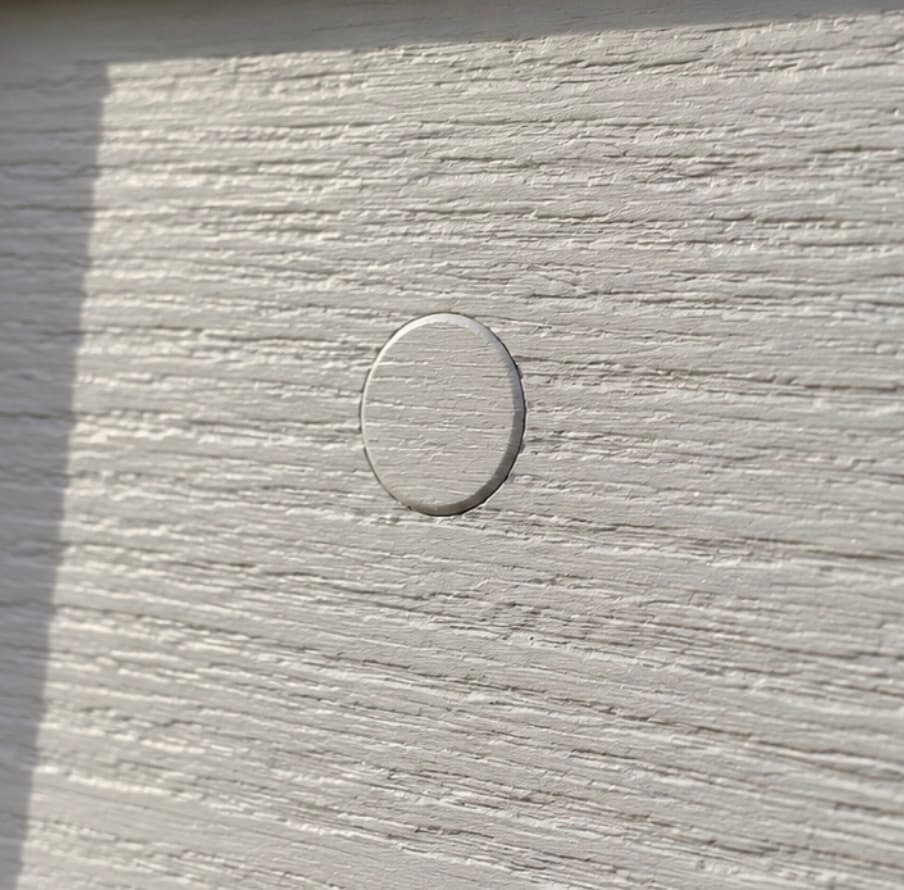
| Pre-wire plugs | Each wire end is tucked behind a small plug set flush in the siding or trim: hidden from view, but easy to find and open when the lights are installed. |
| Wire | 16/4 minimum, 14/4 preferred, stranded or tinned copper. |
We plan for what a future owner may want, not just today's layout, so every roof edge and likely landscape area has wiring ready.
Hidden until installation
Between pre-wiring and installation, nothing hangs out of the walls. Each wire end is attached behind a small pre-wire plug set flush in the siding or trim. The plug can even be painted to match the exterior, making it virtually invisible until installation.
The plugs also mark every wiring location. When it's time to install the lights, the plug comes out, the wire is right there, and it connects to the first light in that section. The hole is hidden behind the lighting track.
Choosing the controller location
The final wiring design accounts for controller capacity, wire gauge, voltage drop and TruLight's installation requirements, so the plan is specific to your home and the system being installed.
The 48V TruLight power supply and controller share one enclosure, which needs to be near power and ideally within Wi-Fi range. Common locations:
- the garage
- an exterior wall
- near the home's central wiring closet or network interface
Have your electrician provide a standard outlet at the planned controller location. If landscape lighting is a possibility, choose a spot where wiring can reach a flower bed, or pre-run at least one wire to a landscape access point. See landscape lighting.
When it happens
- Step 1
Plan
We map every roof edge, the controller location and any landscape access points. The plan is included in the pre-wire fee.
- Step 2
Rough-in visit
Ideally after siding and before insulation and drywall, we run the wire. If insulation comes before siding is finished, we run it earlier.
- Step 3
Finish visit (if needed)
After siding is complete, we return to set pre-wire plugs over the wire ends at the roofline.
- Step 4
Install the lights
Once the exterior is finished, or later when you are ready, the lights connect to wiring that is already in place.
What it costs
Pre-wiring is typically $200–$300, which covers a wiring plan covering every roof edge, the wiring itself, and up to two site visits.
Pre-wiring can also reduce installation labor and may lower the cost of the lighting system itself. Pure Light Systems typically prices permanent roofline lighting around $27–$30 per linear foot, depending on the home, roofline complexity, access, layout, and project scope. With wiring already in place and no attic or crawlspace work through insulation, a pre-wired home can land closer to the $27 end of that range. Actual savings depend on the home's design, wiring layout and installation requirements. See how pricing works.
For builders
Building multiple homes?
We can work with Treasure Valley builders to plan and install permanent-lighting pre-wire during construction, either as part of your standard build or as an optional buyer upgrade. It can be a relatively inexpensive upgrade during construction, and it gives every roof edge a clean path for lights later.
Contact us and choose New Construction / Builder on the form, or call (208) 485-8200.
Planning the lighting design
For layout ideas, see our guides for two-story and multi-gable homes, large garage facades and HOA neighborhoods, or the TruLight system.
New construction pre-wire FAQ
What does pre-wiring for permanent lighting include?
Wire runs from the planned controller location to the first roofline section on each controller port, jumper wires between separate roofline sections, and at least one run toward a landscape access point. Each wire end is concealed behind a small pre-wire plug set flush in the siding or trim.
When should pre-wiring happen?
Ideally after siding and before insulation and drywall. If insulation is scheduled before siding is finished, we run the wire earlier and return to set the pre-wire plugs after siding is complete.
How much does pre-wiring cost?
Pre-wiring is typically $200–$300, which covers a wiring plan covering every roof edge, the wiring itself, and up to two site visits.
Will the pre-wiring be visible before the lights are installed?
Only as a small round plug set flush in the siding or trim at each wire location. The wire stays hidden behind it, and the plug marks the spot for installation.
Do I have to buy the lights during construction?
No. Pre-wiring prepares the home. The lights can be installed once the exterior is finished, or later when you are ready.
What wire is used?
16/4 minimum, 14/4 preferred, stranded or tinned copper wire. For the TruLight system, every potential run of lights is kept under 300 feet, with its own home run back to the controller location.
Where does the controller go?
Near power, and ideally within Wi-Fi range: often the garage, an exterior wall, or near the home’s central wiring closet or network interface. The TruLight power supply and controller share one enclosure.
Is pre-wiring required for permanent lighting?
No. On finished homes we hide wires or route them through the attic. Pre-wiring simply makes installation faster and cleaner because no one has to work through insulation in the attic or crawlspace.
Keep planning
- PricingRoofline lighting typically $27–$30 per linear foot.
- TruLight technologyThe 48V system the wiring is planned for.
- Landscape lightingPlan the yard alongside the roofline.
- Permanent Christmas lightsHoliday lighting without the ladder.
- GuidesDesign guides for every type of home.
- Request a quotePre-wire and lighting quotes.
Building a Home? Pre-Wire Now
Request a quote for pre-wiring during construction, and permanent lighting whenever you're ready.